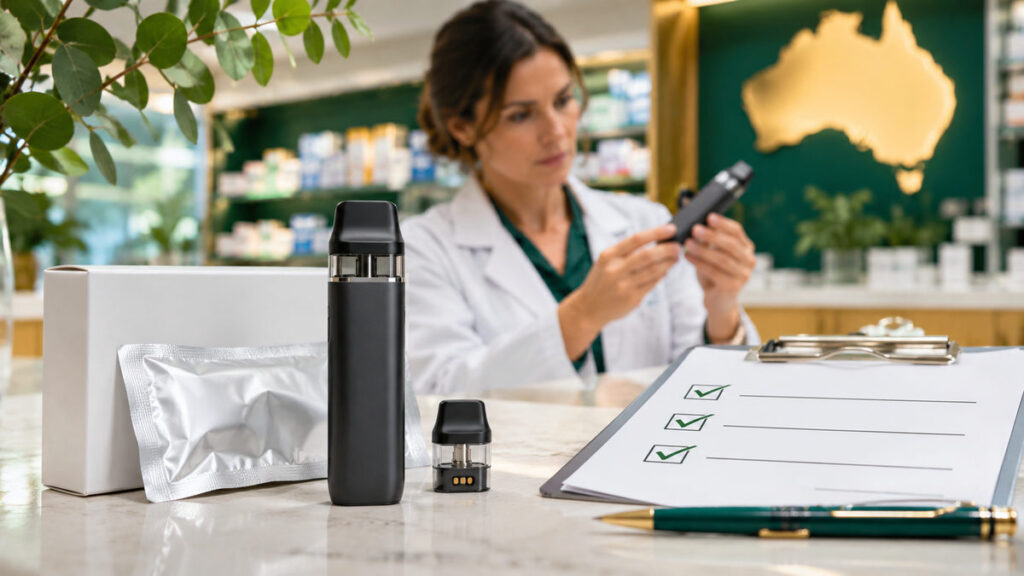
Are vapes legal in Australia? Can an adult still buy one without a prescription? Australia’s Vape Product Rules: November 2026 Update answers both questions, though the finer details make a real difference. Federal requirements now sit alongside state and territory laws governing prescriptions, pharmacy practice, possession, and public use.
That means a product can satisfy federal requirements but still be unavailable in a particular jurisdiction. This guide covers the rules in force in November 2026, not simply the dates on which earlier reforms began. It provides practical guidance for consumers, travellers, health professionals, and businesses.
1. Australia’s Vape Product Rules: November 2026 Update
The current legal position
Australia regulates both nicotine and nicotine-free vapes through its federal therapeutic-goods framework. Any lawful supply must be intended to support smoking cessation or manage nicotine dependence. In short, the former general retail market for recreational vapes can no longer operate legally.
For consumers, lawful access generally means going through a participating pharmacy. A tobacconist cannot sidestep the rules by labelling a product “nicotine-free.” Nor does calling an ordinary disposable vape “therapeutic” create a lawful route to market.
How the reforms reached this point
The current framework arrived in stages. Import controls for disposable vapes began on 1 January 2024, followed by controls for other vaping goods on 1 March 2024.
Wider restrictions on manufacture, commercial possession, supply, and advertising took effect on 1 July 2024. Eligible adults then gained limited prescription-free access through pharmacies from 1 October 2024. This guide, however, focuses on the requirements operating in November 2026.
Products covered by the rules
The framework applies to vaping devices and reusable devices, as well as the substances used in them. Liquids, pods, cartridges, capsules, packs, and kits are also covered. Relevant containers and accessories may fall within the rules when they hold, or are designed to hold, a vaping substance.
Whether a product contains nicotine is not the deciding factor. Zero-nicotine liquids and devices are still covered. A retailer therefore cannot point to a laboratory report showing no nicotine as justification for an ordinary retail sale.
Some related products fall outside this particular vaping framework. They include medicinal cannabis vapes, heated-tobacco products, conventional tobacco, and nicotine pouches. Approved nicotine-replacement products such as patches, gum, lozenges, sprays, and inhalators are also governed by different requirements.
Still, being “outside this framework” does not mean being unregulated. Therapeutic-goods, customs, poisons, tobacco, or state laws may still apply. Medicinal cannabis and controlled substances can also require separate import permissions.
Disposable vapes
Disposable and non-therapeutic vapes cannot lawfully enter Australia’s ordinary commercial market, even when they contain no nicotine. Businesses generally cannot import, manufacture, stock, or supply these goods as standard consumer merchandise.
Narrow statutory pathways may be available for certain therapeutic goods or authorised activities. A traveller exemption can also cover limited goods carried for treatment. Neither pathway, however, brings back an ordinary retail market for disposable vapes.
2. Where and How Adults Can Legally Obtain Therapeutic Vapes
The pharmacy-only model
Consumers can lawfully obtain therapeutic vapes from participating Australian pharmacies, provided the relevant conditions are met. Tobacconists, supermarkets, convenience stores, service stations, and specialist vape shops cannot sell them. This prohibition applies to nicotine and nicotine-free products alike.
For example, an adult cannot legally purchase a zero-nicotine vape from a petrol station. Describing it as an aroma device or lifestyle product changes nothing. Its design, presentation, contents, and intended use all help determine its legal character.
Adults buying without a prescription
Someone aged 18 or older may obtain an eligible Schedule 3 therapeutic vape without a prescription. It must contain no more than 20 mg/mL of nicotine, and the relevant state or territory law must allow the supply.
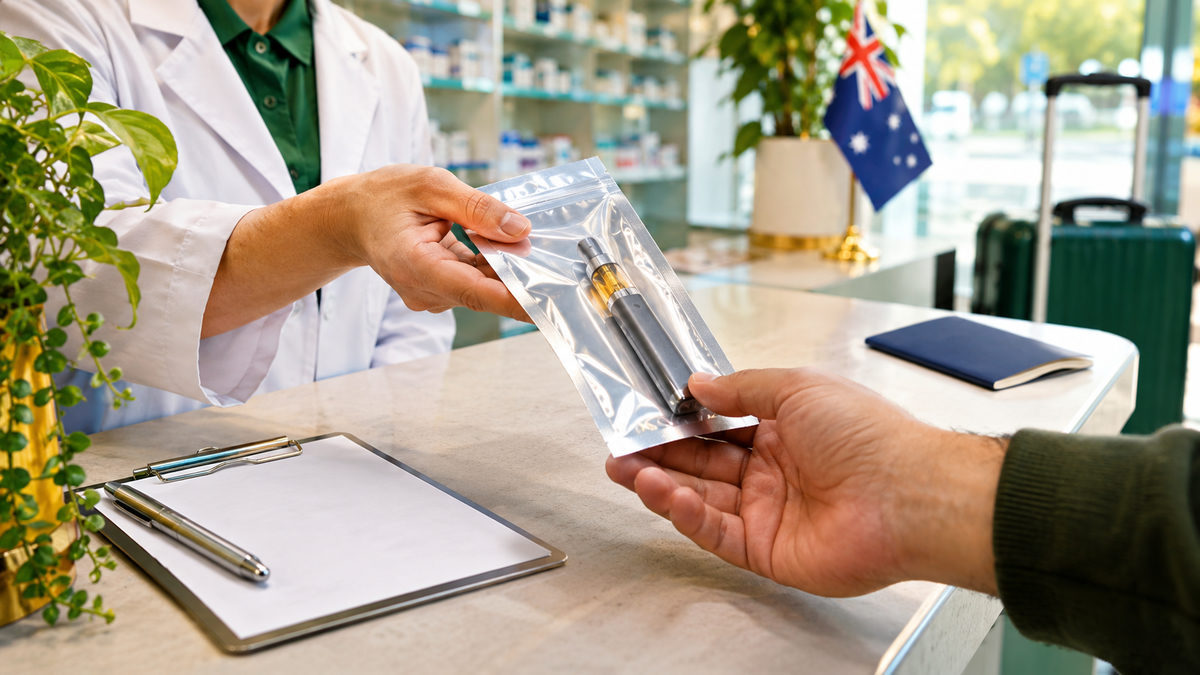
Before receiving the product, the consumer must consult directly with a pharmacist. The pharmacist must decide that vaping is clinically appropriate for smoking cessation or the management of nicotine dependence. Simply meeting the age requirement does not guarantee a purchase.
The 20 mg/mL threshold applies only to prescription-free supply by a pharmacist. It is not a blanket limit on every therapeutic vape available in Australia. Products above that concentration require a valid prescription and must be supplied as Schedule 4 products.
When a prescription is required
A prescription is required when the nicotine concentration exceeds 20 mg/mL. People under 18 also need one wherever local law allows them to access these products. Some jurisdictions may set even stricter rules for prescriptions or supply.
Medical practitioners and nurse practitioners may use an applicable Special Access Scheme or Authorised Prescriber pathway. Which route is appropriate depends on the product, the patient, and the professional’s authority. Patients should discuss access with a qualified practitioner rather than trying to choose a pathway themselves.
Even with a prescription, supply is not guaranteed. The pharmacy must confirm that both the product and the access route meet federal and local requirements. Some jurisdictions also prohibit or place further limits on supply to people under 18.
Access for people under 18
Prescription-free pharmacy access is only available to adults. Younger patients need clinical oversight from a prescriber and a valid prescription. The pharmacist must also check identity, age, prescription validity, and any relevant authorisation.
Rules for younger patients vary between states and territories. In some jurisdictions, supply is restricted even when a prescription has been issued. Parents and carers should check the local requirements before arranging an appointment or trying to collect a product from a pharmacy.
What the pharmacist must consider
The pharmacist carries out an individual consultation and verifies the consumer’s identity and age. They consider smoking history, nicotine dependence, previous attempts to quit, and relevant health risks. They also decide whether the requested product and strength are suitable.
The consultation should cover dosing, administration, storage, side effects, and safe disposal. Pharmacists should also talk through established cessation support and other treatment choices. This is more than a quick retail transaction.
Federal notification and recordkeeping duties may apply as well. Schedule 3 supply, for instance, generally requires notification through the relevant Special Access Scheme process within the required period. For prescription supply, the pharmacy may need to validate the prescriber’s access authority.
No pharmacy is required to participate, carry stock, or provide a requested product. A pharmacist can decline supply if the treatment seems unsuitable or essential information is missing. Therapeutic vapes also remain unapproved products and are not regarded as first-line treatment for smoking cessation.
Websites and remote services
A legitimate remote service must work within Australia’s lawful pharmacy framework. An Australian pharmacist should perform the assessment and accept responsibility for the supply. Consumers should check the pharmacy’s identity, location, registration details, and consultation process before proceeding.
An Australian domain name or an age gate proves little on its own. Pricing products in Australian dollars does not make overseas fulfilment lawful either. Non-pharmacy websites and foreign sellers cannot revive the former personal-importation pathway.
3. Legal Vape Products, TGA Notification and Product Standards
The notified vape list
Pharmacies can generally supply only goods listed on the current TGA notified vape list, unless another specific statutory pathway applies. Professionals should also steer clear of goods recorded under withdrawn or ceased sponsor notices.
The list identifies products that sponsors have notified for lawful therapeutic supply. Entries commonly include the product, sponsor, nicotine strength, flavour, volume, and format. Checking the brand name alone can therefore give a misleading result.
Notification does not equal approval
Appearing on the notified list does not mean a product has been fully assessed or approved by the TGA. Sponsors generally declare that their goods meet the applicable requirements. The listing is not proof of quality, safety, efficacy, or performance based on a complete pre-market evaluation.
Notification also does not place an unapproved product on the Australian Register of Therapeutic Goods. Nor does it guarantee that a pharmacy will stock it or supply it to a consumer. A notified product should not be described as “TGA-approved” unless it has genuinely received separate approval.
Ingredients and flavours
Therapeutic vaping substances are subject to tightly controlled standards. Permitted formulation components may include nicotine, propylene glycol, glycerol, water, and compliant flavouring ingredients. Prescription products may contain up to 50 mg/mL of nicotine, while pharmacist-only supply is capped at 20 mg/mL.
The standards also limit prohibited ingredients, impurities, and contaminants. Manufacturers and sponsors must account for the quality of every component. A “food-grade ingredients” label is no substitute for compliance with therapeutic product standards.
Unapproved therapeutic vaping substances may come only in mint, menthol, or tobacco flavours. Novelty blends such as mango-ice confectionery combinations do not fall within those categories. Youth-oriented names, cartoons, or other presentation may also breach product and advertising controls.
Packaging and labelling
Packaging must be predominantly plain and comply with relevant child-resistant requirements. Depending on the format, tamper protection and leakage controls may apply too. These safeguards help reduce accidental exposure, particularly when concentrated liquid could be accessible to young children.
Labels and supporting information must be presented clearly in English. Depending on the goods, required details can include product identity, nicotine strength, volume, ingredients, batch information, and expiry information. Sponsor details, storage instructions, directions for use, and mandatory warnings may also be required.
The text needs to be readable, not obscured by decorative graphics. Product names must not appeal to children or suggest unsupported health benefits. Required information must also correspond exactly to the substance, device, accessory, pack, or kit being supplied.
Reusable devices and technical standards
Therapeutic devices must meet standards for design, manufacture, and quality management. These requirements cover electrical systems, batteries, heating elements, and materials that touch the vaping substance. Emissions, toxicological risks, and potentially harmful by-products are addressed as well.
Current standards favour reusable therapeutic designs, not an unrestricted disposable market. Manufacturers must account for foreseeable misuse, overheating, leakage, and component failure. Chargers and other electrical components must also meet relevant safety expectations.
Why marketing claims cannot cure non-compliance
Calling a product therapeutic does not make it lawful. The same is true for unnotified goods, disposable devices, prohibited flavours, and non-compliant packaging. False therapeutic claims may actually create further legal trouble.
A product labelled nicotine-free is still subject to vaping controls. Likewise, placing an item behind a pharmacy counter does not automatically legalise it. The exact product must meet all relevant notification, standards, scheduling, and supply requirements.
How to verify a product
Consumers and professionals should search the live TGA notified vape list using the exact product and supplier names. They should then check the strength, flavour, volume, device type, and pack format. An entry for a 20 mg/mL pod does not validate a similarly branded 40 mg/mL bottle.
Check again immediately before prescribing, ordering, or supplying the product. Sponsor notices can change, and listings may shift to withdrawn or ceased status. Old wholesaler catalogues and printed screenshots can quickly become unreliable.
4. Online Purchases, Imports and the Traveller Exemption
Domestic and overseas online sales
Non-pharmacy websites cannot legally sell vapes to Australian consumers. An Australian domain, an age-verification screen, or a nicotine-free label does not alter that position. If fulfilment occurs overseas, import restrictions arise alongside the unlawful supply concerns.
The former personal-importation pathway can no longer be used to order vaping goods from overseas. Individuals cannot obtain an import licence simply to buy vape supplies for personal use. Even a prescription does not authorise a postal or courier order from a foreign seller.
Commercial import requirements
Eligible businesses generally require an import licence from the Office of Drug Control. A separate permit is also needed for each consignment or relevant category of goods. Before supplying products lawfully in Australia, importers must also meet TGA notification or registration requirements.
Products containing scheduled substances may require state or territory authorisations. Importers must identify lawful recipients and keep appropriate records too. One federal document rarely covers the entire compliance process.
The limited traveller exemption
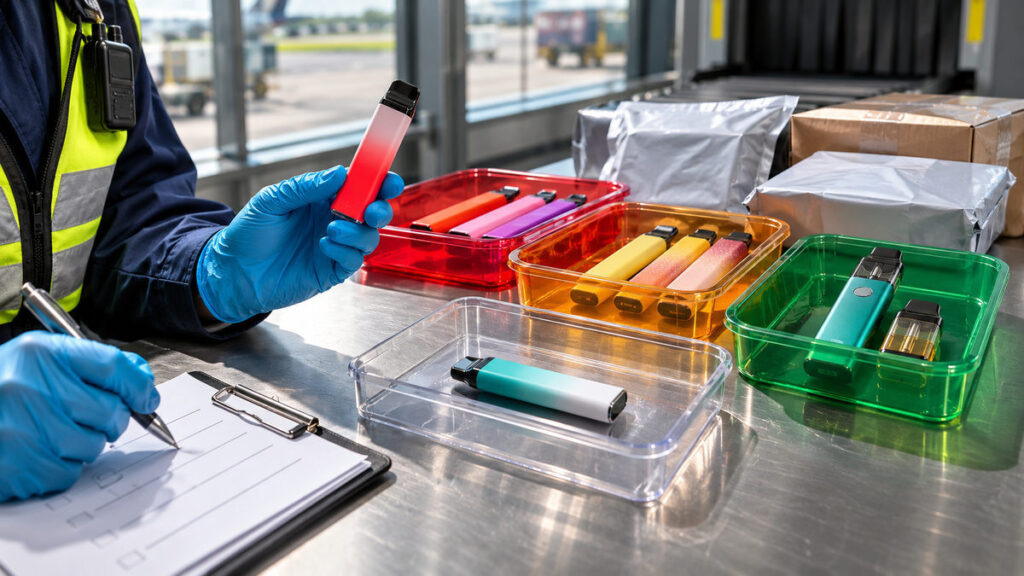
A limited exemption allows a traveller to bring a small quantity of vaping goods into Australia. The goods must be for the treatment of the traveller or someone travelling in their care. That person must also arrive on the same aircraft or ship.
This exemption applies to accompanied baggage, not to products posted in advance or ordered by courier. Ordinary maximum quantities are:
- Two vapes in total, whether reusable or disposable.
- Twenty cartridges, capsules, pods, or comparable vaping accessories.
- Two hundred millilitres of vaping substance in liquid form.
Those limits do not necessarily apply to controlled substances or medicinal cannabis. Separate customs and drug-control rules may govern those products. Travellers carrying cannabis-related goods should seek specific advice before leaving.
Preparing for the border
Whenever possible, travellers should leave products in their original packaging. Prescriptions, treatment letters, and other supporting documents should be carried as well. An English-language list should also identify every device, substance, strength, and quantity.
Airlines have their own rules for batteries and cabin baggage. Spare lithium batteries, for example, commonly need protection against short circuits. Check the carrier’s conditions before packing a device.
Travellers should declare the goods whenever an arrival card or officer requires them to do so. Unsure? Ask an Australian Border Force officer. Declaring an item does not guarantee entry, but concealing it can make the consequences more serious.
Australian Border Force handles border controls, while the Office of Drug Control manages import permissions. The TGA is responsible for therapeutic-goods requirements. Between them, these agencies may detain, seize, or destroy goods that lack the necessary exemption or permission.
5. Possession, Advertising, Enforcement and Business Penalties
Personal and commercial possession
The federal vaping reforms do not generally make personal possession a criminal offence. That does not, however, validate an earlier unlawful sale or import. States and territories may also impose their own possession requirements.
Federal rules place a strong focus on commercial possession and retail premises. Current commercial-quantity thresholds include nine devices, 60 accessories, or 400 mL of vaping liquid. Smaller quantities can still trigger restrictions when held at non-pharmacy retail premises.
Limited exceptions help legitimate pharmaceutical supply chains operate. These may cover authorised manufacture, wholesale handling, transport, storage, surrender, disposal, research, or pharmacy work. Each exception comes with conditions and offers no protection for ordinary vape retailing.
State and territory differences
Commonwealth rules provide the national foundation, but local law remains crucial. Individual jurisdictions may add requirements involving prescriptions, age, possession, pharmacy practice, and supply. They also control vaping in workplaces, vehicles, schools, and smoke-free public spaces.
The rules are not identical across Australia. Prescription-free pharmacy supply allowed in one jurisdiction may be subject to extra conditions in another. Businesses operating nationally should not assume a single compliance process will work everywhere.
Advertising and promotions
Advertising vaping goods is broadly banned unless a specific legal authorisation applies. The prohibition extends to websites, social media, sponsorships, promotions, endorsements, and public displays. It may even cover conduct that never results in a completed sale.
Discount codes, free samples, competitions, and purchase incentives may count as prohibited promotion. Influencer posts and branded event sponsorship can create legal exposure too. Claims about quitting success, safety, or health benefits may also breach therapeutic-goods and consumer laws when they are unsupported.
The statutory exceptions are narrow. Health professionals and businesses should confirm that an exception applies before publishing product information. Labelling material as “education” will not protect it if it promotes a brand, encourages demand, or makes impermissible claims.
Enforcement and consequences
Enforcement can involve the TGA, Australian Border Force, Australian Federal Police, local police, and jurisdictional health regulators. Medicines and pharmacy regulators may take part as well. Joint operations can target imports, warehouses, shops, websites, and organised distribution networks.
Authorities can seize or destroy unlawful stock and apply for injunctions. Other responses include infringement notices, licence suspensions, civil proceedings, and criminal prosecution. Relevant conduct includes unlawful importation, manufacture, wholesale supply, retail sale, commercial possession, and advertising.
Serious Commonwealth contraventions can lead to imprisonment and multimillion-dollar financial penalties. Earlier maximums have included seven years’ imprisonment for certain offences. There is no single penalty figure, however, that applies to every offence, individual, corporation, or jurisdiction.
Legislation and penalty-unit values can change. Businesses should check the current Act, regulations, penalty units, and applicable local laws. Seeking qualified legal advice is sensible before handling questionable stock or responding to an investigation.
Reporting unsafe products and unlawful activity
Stop using any vape that looks damaged, contaminated, leaky, overheated, or incorrectly labelled. Severe symptoms require urgent medical attention. After suspected poisoning or exposure to dangerous liquid, contact an appropriate poisons information service as well.
Consumers can report adverse events, suspected defects, and device incidents to the TGA. Health professionals have their own reporting duties and should notify the sponsor when required. Suspected illegal sales, imports, or advertising can also be reported to the TGA or the relevant local regulator.
6. Practical Vape-Law Compliance Checklists
Consumers and parents
- Buy only through a participating Australian pharmacy.
- Complete the pharmacist’s assessment honestly and provide identification.
- Check the exact product on the current notified vape list.
- Follow age, prescription, strength, and jurisdictional requirements.
- Store devices and liquids securely away from children and pets.
- Use established cessation support alongside professional advice.
Travellers
- Confirm that the goods have a genuine treatment purpose.
- Check accompanied-baggage eligibility and quantity limits before departure.
- Keep prescriptions, treatment information, and original packaging accessible.
- Review customs, controlled-substance, medicinal-cannabis, and airline rules.
- Declare the goods when required or whenever uncertainty remains.
Pharmacists and healthcare professionals
- Confirm the product’s current notification status and exact format.
- Check scheduling, nicotine concentration, patient age, and jurisdictional law.
- Validate the prescription, Special Access Scheme route, or Authorised Prescriber authority.
- Assess clinical suitability and provide dosing, safety, and cessation guidance.
- Complete supply notifications, records, and safety reports within applicable periods.
- Review current professional guidance before prescribing or supplying.
Retailers
- Do not stock, display, advertise, promote, sell, or transfer vaping products.
- Do not rely on nicotine-free labels or therapeutic marketing statements.
- Separate suspected illicit stock and prevent further distribution.
- Arrange lawful surrender, return, or disposal through an authorised process.
- Obtain jurisdiction-specific advice before moving or handling any stock.
Importers, wholesalers, and suppliers
- Verify import licences and consignment permits before shipment.
- Confirm sponsor notices, registrations, standards, and local authorisations.
- Supply only recipients authorised to receive the exact goods.
- Maintain storage, transport, inventory, disposal, and traceability records.
- Review advertising restrictions before publishing any product communication.
Everyone should check the latest information from the TGA, Office of Drug Control, Australian Border Force, and their state or territory health authority. Notified products and local requirements can change. This guide offers general legal and health information, not medical or legal advice.
Conclusion
As of November 2026, legal access to vaping products in Australia remains limited to regulated therapeutic use through pharmacies. Adults may obtain certain products without a prescription, but only after consulting a pharmacist. Higher strengths, younger patients, and circumstances covered by stricter local laws still require prescriptions.
Products, imports, advertising, and commercial supply are all tightly controlled. Personal possession under federal law does not make an unlawful purchase or import legal. For businesses, the consequences of handling or promoting illicit products can be especially serious.
Before buying, supplying, prescribing, or importing a vape, check the exact product on the current TGA notified vape list. After that, confirm the relevant state or territory requirements with a pharmacist, healthcare practitioner, or qualified legal adviser.