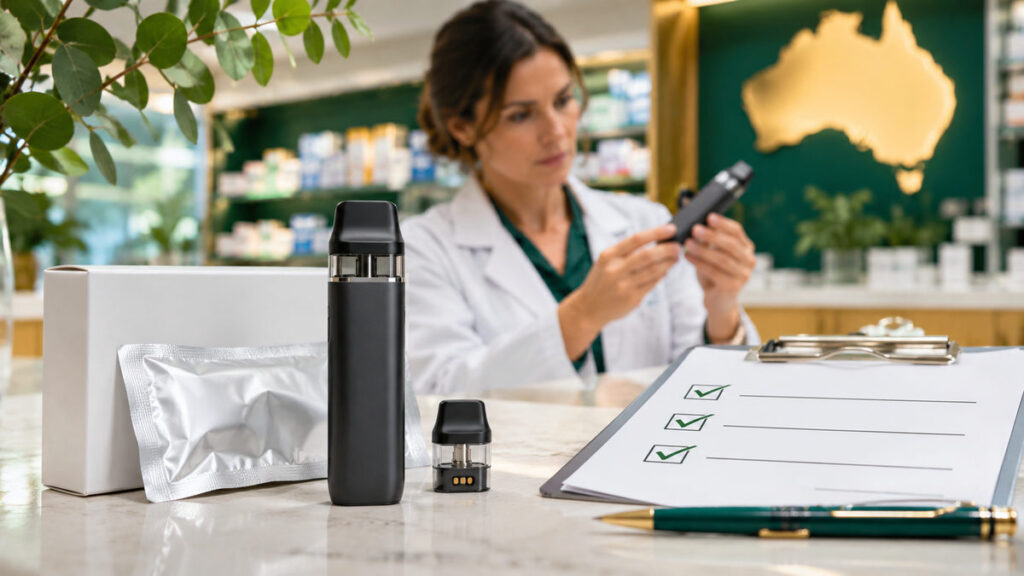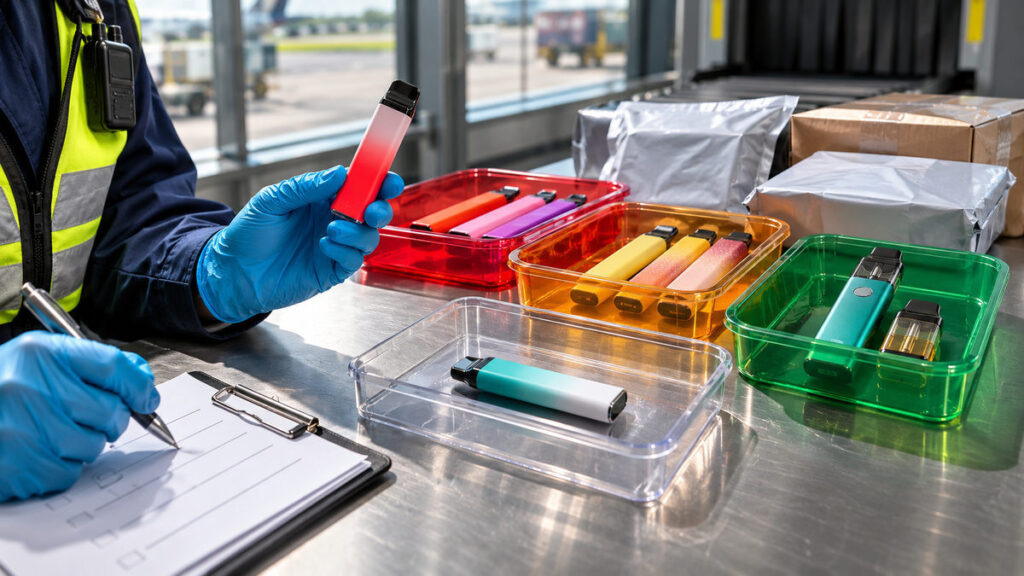
A convenience store can legally sell cigarettes, yet it cannot sell even a nicotine-free vape. That contrast is behind much of the confusion about why non-pharmacy vape retail sales are prohibited in Australia. Consumers and retailers have to navigate national rules, local laws, prescription requirements, product limits, and tightly controlled supply pathways.
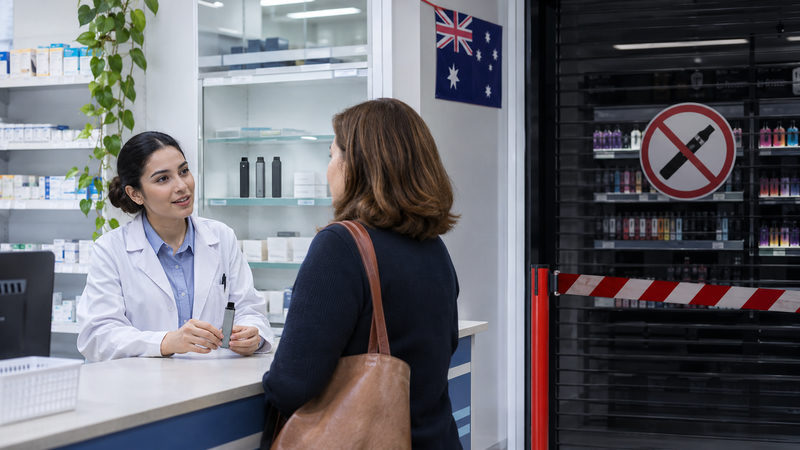
Still, the central rule is simple. Australian pharmacies may supply eligible therapeutic vapes for smoking cessation or nicotine-dependence management. Ordinary shops, informal sellers, and non-pharmacy websites cannot sell vaping goods directly to consumers.
1. Why Non-Pharmacy Vape Retail Sales Are Prohibited in Australia
Australia’s national vaping reforms prevent non-pharmacy retailers from selling any type of vape. This restriction applies to physical stores, market sellers, social-media accounts, and non-pharmacy online businesses. It covers products containing nicotine as well as those labeled nicotine-free.
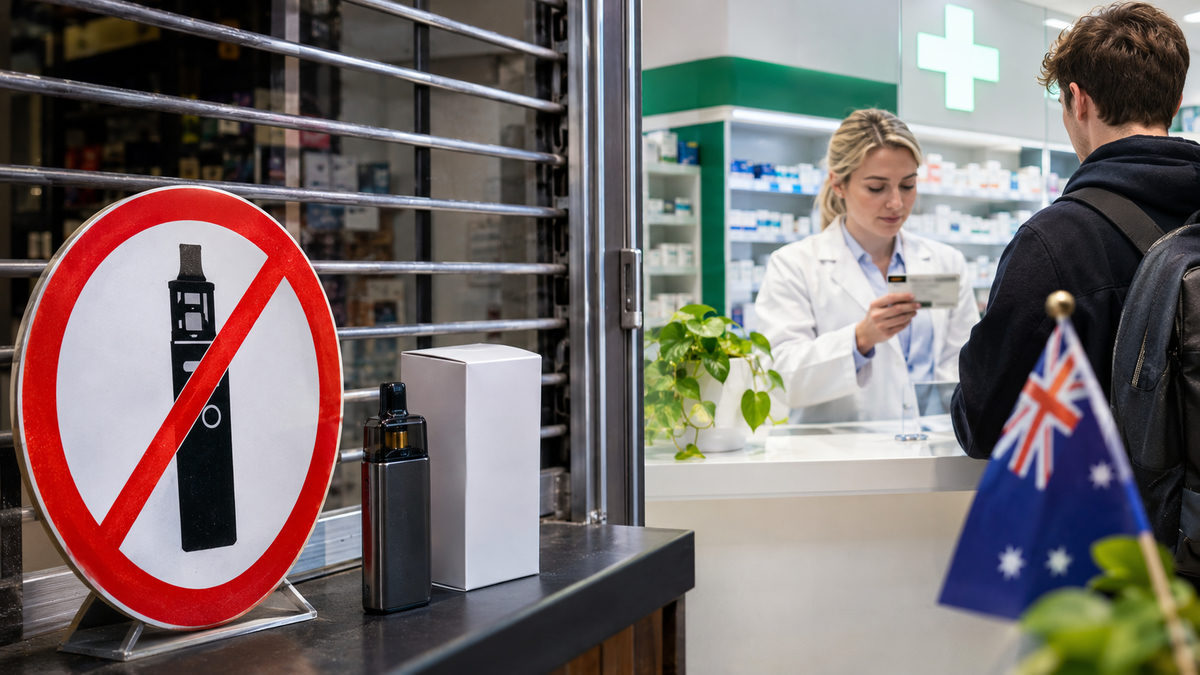
The policy is designed to control access and reduce nicotine dependence, especially among young people. Pharmacy oversight also puts a safeguard between consumers and products that may contain undeclared or incorrectly measured ingredients. At the same time, it helps disrupt black-market distribution through convenience stores, tobacconists, and informal online networks.
A therapeutic framework, not a consumer market
Australia treats lawful vapes as therapeutic goods, not ordinary lifestyle products. Eligible products may therefore be used only to support smoking cessation or manage nicotine dependence. A pharmacy cannot lawfully supply them simply because an adult wants a recreational product.
This approach connects supply with professional advice. A pharmacist can discuss nicotine strength, dependence, side effects, and proven alternatives, for example. Those safeguards are rarely present during a cash purchase at a service station or through social media.
Combustible tobacco remains available under a separate legal framework. But the continued sale of cigarettes does not grant permission to sell vapes. Tobacco retailers must comply with tobacco laws, while vaping goods face added controls under therapeutic-goods legislation.
Products the retail prohibition covers
The prohibition is intentionally broad because a label does not always reveal what a product actually contains. Authorities have found nicotine in products sold as nicotine-free. So, a colorful package or zero-nicotine claim does not place a product outside the law.
- Single-use and disposable vapes
- Non-therapeutic vaping devices and substances
- Nicotine vapes sold outside lawful therapeutic pathways
- Products marketed as nicotine-free consumer vapes
- Regulated pods, cartridges, liquids, and accessories
Disposable vapes cannot be part of ordinary pharmacy supply either. Lawful access centers on compliant therapeutic products listed through the national notification system. In other words, the model controls the product, its purpose, the supplier, and the conditions under which it is supplied.
2. The Vape Retail Laws Behind the Pharmacy-Only Model
The Therapeutic Goods Act 1989 is the main national foundation for regulating vaping goods. The Therapeutic Goods and Other Legislation Amendment (Vaping Reforms) Act 2024 expanded that framework. Together, the laws regulate commercial possession, manufacture, supply, importation, and advertising.
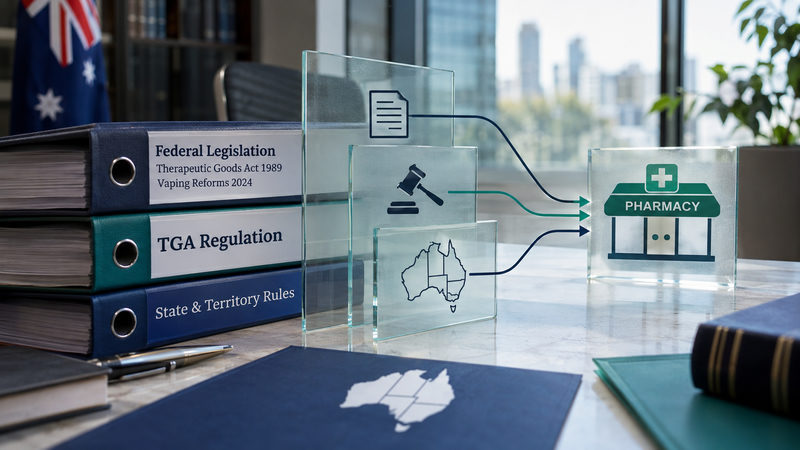
Chapter 4A of the therapeutic-goods legislation also establishes specific controls for vaping goods. A business cannot sidestep them by describing its stock as novelty merchandise. The law looks at the product’s features, presentation, intended use, and the circumstances surrounding it.
Limited supply-chain exceptions
The Therapeutic Goods (Vaping Goods—Possession and Supply) Determination 2024 sets out limited exceptions. These support legitimate work within pharmaceutical, transport, storage, research, disposal, and related supply chains. Each participant must meet the relevant conditions; a general business licence is not enough.
An authorized logistics company, for example, may transport compliant goods between approved supply-chain participants. That permission does not let it sell products to the public. Similarly, a waste operator may handle stock for destruction without gaining the right to supply it at retail.
Supporting national and local rules
The Poisons Standard classifies nicotine and helps determine when pharmacist-only or prescription controls apply. Customs rules, meanwhile, restrict vape imports unless an exemption or permission covers the shipment. The Public Health (Tobacco and Other Products) Act 2023 also supports broad restrictions on advertising and promotion.
State and territory laws add another layer of regulation. They may cover medicines, poisons, tobacco products, vaping, pharmacy practice, age limits, and possession. As a result, a pathway allowed nationally may still face stricter requirements in a particular jurisdiction.
The legal meaning of vaping goods is broad. It can cover devices, liquids, substances, pods, cartridges, components, and certain accessories. Even unfinished or temporarily inoperable devices may fall within the controls.
- Therapeutic vapes: Eligible products intended for smoking cessation or nicotine-dependence management.
- Nicotine vapes: Products containing nicotine, with supply conditions based partly on concentration.
- Nicotine-free vapes: Products without nicotine that still remain subject to vaping controls.
- Disposable vapes: Single-use products prohibited from lawful consumer supply.
Retailers and consumers therefore need to check both national and local requirements. A summary written for another state may not answer the question where they live.
3. Which Retailers, Products, and Sales Channels Are Prohibited?
Only participating Australian pharmacies may supply eligible therapeutic vapes to consumers. Ordinary retailers cannot lawfully enter the consumer vape market. A tobacco retail licence, company registration, or liquor licence does not change that.
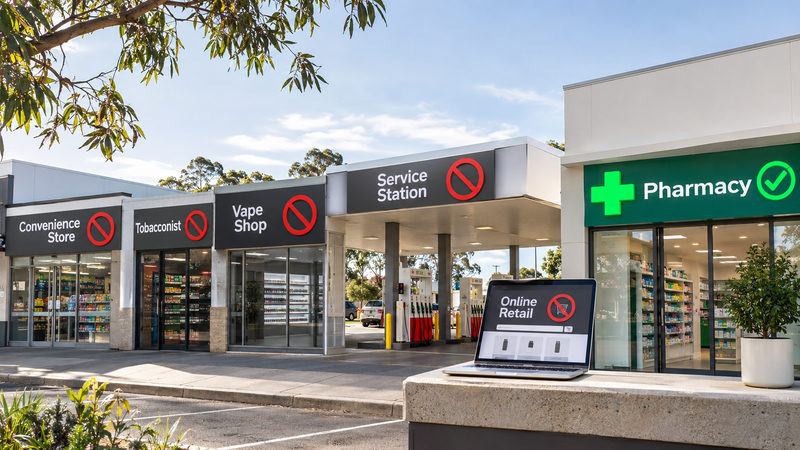
Prohibited non-pharmacy sellers commonly include:
- Convenience stores and milk bars
- Tobacconists and specialty vape shops
- Service stations and supermarkets
- Market stalls and pop-up sellers
- Social-media accounts and messaging groups
- Unauthorized Australian or overseas websites
These businesses cannot sell nicotine vapes, nicotine-free vapes, disposable products, or regulated vaping substances. Nor can they make a prohibited product lawful simply by presenting it as a lifestyle item. Descriptions such as “aromatherapy device” or “collectible” do not create an automatic exemption.
Informal and online sales
A lawful pharmacy transaction requires a participating pharmacy and pharmacist oversight. An under-the-counter sale, by contrast, remains unlawful even if the buyer is an adult smoker. Social-media deliveries, cash-only deals, and stock supplied from a private home also sit outside lawful retail pathways.
Non-pharmacy online sales are prohibited. Pharmacist-only supply also generally requires direct pharmacist involvement and compliance with applicable face-to-face rules. Pharmacies must follow jurisdictional medicines laws, professional standards, storage duties, and quantity limits as well.
Consumers should not assume that an overseas website can legally mail vapes into Australia. Personal importation pathways for ordinary vape orders have closed. Vaping goods are prohibited imports unless a specific permission, exemption, or limited traveller arrangement applies.
An overseas prescription does not, by itself, authorize a postal import. A foreign seller’s promise of “customs-safe” delivery provides no legal protection either. Border authorities may detain or seize prohibited goods, and other agencies may investigate the transaction.
Common attempts to disguise a sale
Describing a vape as a free gift does not necessarily get around supply laws. A seller might, for example, charge an inflated price for a case and include a “free” device. Authorities can assess the full arrangement instead of simply accepting the wording printed on a receipt.
The same principle covers zero-nicotine labels, samples, loyalty rewards, and supposed display pieces. A retailer may face consequences even when no conventional sale is completed. Commercial possession, advertising, and other forms of supply conduct can trigger separate provisions.
4. How Legal Pharmacy Supply Works for Consumers
A participating pharmacy may supply therapeutic vapes only for smoking cessation or nicotine-dependence management. The product must meet the relevant national requirements too. Even so, therapeutic vapes remain unapproved goods and do not appear on the Australian Register of Therapeutic Goods.
Eligible goods must instead appear on the TGA’s notified vape list. Sponsors declare that the listed products meet applicable standards, but the TGA has not individually approved their safety or effectiveness. Being included does not give a product the same approval as a registered medicine.
What happens during a pharmacy consultation?
Before pharmacist-only supply, the pharmacist checks the consumer’s age and identification. The pharmacist also asks why the person wants the product and discusses their smoking or vaping patterns. This helps uncover dependence, health risks, and potentially better treatment options.
The pharmacist may explain dosage, nicotine strength, correct use, safe storage, and possible adverse effects. The conversation should also cover approved first-line options. These may include behavioral support, nicotine-replacement products, and prescription cessation medicines when clinically suitable.
A pharmacist may refuse supply if a vape seems inappropriate or unsafe. Pharmacies are not required to stock therapeutic vapes, either. Consumers should not expect every pharmacy to participate in the pathway.
When is a prescription required?
Adults aged 18 or older may access eligible therapeutic vapes containing no more than 20 mg/mL nicotine without a prescription. This pathway is available only where state or territory law allows it, and the consumer must complete the required pharmacist consultation.
A medical practitioner or nurse practitioner generally needs to prescribe products containing more than 20 mg/mL nicotine. Prescription products also cannot exceed the applicable 50 mg/mL maximum. Local rules and clinical judgment may add further restrictions.
People under 18 generally require a prescription where local law permits therapeutic vape supply. Some jurisdictions, however, prohibit supply to minors altogether or impose broader prescription requirements. Families should review current local guidance before seeking access.
- Up to 20 mg/mL: Pharmacist-only access for eligible adults where local law permits.
- Above 20 mg/mL: A valid prescription generally applies.
- Above 50 mg/mL: Therapeutic vape supply is not permitted.
- Under 18: A prescription generally applies, although local law may prohibit supply.
Supply limits and professional duties
Pharmacists must use the lawful unapproved-goods pathway and supply only products on the notified list. They must follow storage, documentation, notification, and recordkeeping requirements too. Applicable limits can also restrict a consumer to one month’s supply during one month.
Therapeutic vaping is not considered a first-line treatment for quitting. Approved nicotine patches, gum, lozenges, sprays, and certain medicines have more established pathways. A pharmacist or clinician may therefore recommend those options before considering a therapeutic vape.
5. Product Standards, Packaging, Advertising, and Identification
Lawful therapeutic products must meet standards for their contents, presentation, and performance. The requirements cover ingredients, nicotine concentration, device safety, packaging, labeling, and warning statements. Child-resistant features help reduce accidental exposure as well, particularly to concentrated nicotine liquids.
For pharmacist-only supply, the nicotine concentration cannot exceed 20 mg/mL. Prescription products may contain higher concentrations, but no more than 50 mg/mL. Consumers should check the stated strength carefully because similar-looking packages may hold different concentrations.
Flavor and device restrictions
Permitted therapeutic vape flavors are limited to unflavored, mint, menthol, and tobacco. Products promoted with fruit, candy, dessert, beverage, or novelty flavors do not fit that framework. Disposable and non-therapeutic products remain prohibited, whatever their flavor.
Device requirements aim to reduce preventable risks involving batteries, heating systems, and substance delivery. Packaging must not resemble confectionery or promote recreational appeal. A therapeutic presentation should encourage informed use, not impulse buying.
Advertising remains tightly controlled
Australia broadly prohibits vape advertising, promotion, public display, and sponsorship. The same general restrictions apply to online and social-media marketing. Limited communications may be allowed, but only when legislation specifically authorizes them for health professionals or lawful supply.
A pharmacy’s right to supply a product does not give it unlimited promotional rights. Flashy window displays or influencer campaigns, for instance, may breach separate advertising rules. Retailers need to consider advertising obligations separately from possession and supply requirements.
How consumers can assess a product
- Confirm that a participating Australian pharmacy supplies the product.
- Check that supply serves a genuine therapeutic purpose.
- Review the nicotine strength and permitted flavor.
- Look for compliant warnings, labels, and child-resistant packaging.
- Confirm the exact product appears on the current notified vape list.
- Complete the required pharmacist consultation or provide a valid prescription.
Professional-looking packaging proves nothing on its own. An Australian web address may also conceal an overseas or unauthorized seller. Likewise, a nicotine-free claim or overseas prescription cannot independently establish that the supply is lawful.
Consumers should match the exact product and supplier details with current official information. Why? A similarly named item may contain different ingredients or have a different notification status. Products can also be removed from the notified list, meaning an earlier listing may no longer support supply.
6. Penalties, Enforcement, Reporting, and Retailer Compliance
Unlawful commercial possession, manufacture, supply, importation, or advertising can have serious consequences. Depending on the conduct involved, authorities may seek civil penalties, criminal prosecution, and substantial fines. Businesses can also lose stock, incur legal costs, suffer trading disruption, and face action under local licensing laws.
Regulators can inspect premises and investigate suspected breaches. Authorized officers may seize unlawful products, collect records, test goods, and share intelligence with partner agencies. Seized products may eventually be destroyed instead of returned to the seller.
National enforcement may involve the TGA, Australian Border Force, and other Commonwealth bodies. State and territory health departments, police, medicines regulators, and trading authorities can act under local laws. Coordinated investigations may follow the chain from importers and wholesalers to retailers and connected online accounts.
Immediate steps for retailers
A retailer that discovers prohibited stock should immediately stop all sales and promotions. Staff should remove displays and suspend online listings while preserving relevant records. Selling the remaining stock simply to recover its purchase price can lead to further exposure.
- Quarantine remaining products in a secure location.
- Preserve invoices, messages, delivery records, and supplier details.
- Record product names, quantities, batch details, and storage locations.
- Prevent staff from selling, gifting, transferring, or privately removing stock.
- Seek regulator guidance or independent legal advice about disposal.
- Use an authorized waste or return pathway where the rules permit it.
Retailers should not automatically send stock back to an unverified supplier. The transfer itself could amount to unlawful supply. Throwing products into ordinary rubbish is also risky because of the environmental, battery, and nicotine-exposure hazards involved.
Current exemptions may allow certain transport, return, export, remanufacture, or destruction activities. But businesses must satisfy every applicable condition. Written guidance is particularly valuable when stock involves large quantities or ingredients that are not clearly known.
Reporting suspected illegal sales
Consumers and businesses can report suspected breaches through the TGA’s official breach-reporting channel. Useful details may include store information, product photographs, receipts, advertisements, website addresses, and dates. Reporters should never confront sellers or put themselves at risk to collect evidence.
Depending on what happened, the matter may also need to be reported to state or territory health authorities, police, or consumer regulators. Australian Border Force may become involved in suspected unlawful imports. Urgent dangers, including nicotine poisoning, require immediate medical assistance.
Reliable guidance is available from the TGA, the Australian Government Department of Health, Disability and Ageing, and Australian Border Force. State or territory health departments provide advice specific to each location. Retailers facing possible penalties should seek independent legal advice instead of relying on assurances from a supplier.
Safer support for nicotine dependence
Someone using an illicit vape may worry that stopping will bring strong cravings. The good news is that support does not depend on further black-market purchases. A pharmacist or clinician can assess the person’s dependence and help create a realistic quitting plan.
- Quitline counseling and structured behavioral support
- Approved nicotine patches, gum, lozenges, sprays, or inhalators
- Prescription cessation medicines when clinically appropriate
- Follow-up consultations for cravings, withdrawal, and relapse prevention
- Support from general practitioners, pharmacists, and qualified cessation services
A person might, for example, use a nicotine patch for steady control and gum when cravings suddenly hit. A health professional can help choose suitable strengths and prevent incorrect use. Regular follow-up also makes it easier to address triggers before a brief lapse turns into a full return to smoking.
Vape regulations, exemptions, and penalties can change. Requirements may also vary between national, state, territory, and local jurisdictions. Readers should therefore confirm the current rules before possessing, supplying, importing, advertising, transferring, or disposing of vaping goods.
Conclusion
Australia’s pharmacy-only model treats vapes as controlled therapeutic goods rather than general retail products. Non-pharmacy sellers cannot sell nicotine, nicotine-free, disposable, or non-therapeutic vapes. Lawful pharmacy access, meanwhile, depends on therapeutic purpose, pharmacist oversight, age, nicotine strength, compliant products, and local law.
Check the latest TGA and state or territory health guidance before buying, supplying, storing, disposing of, or reporting vaping products. Retailers should seek guidance before moving prohibited stock. Consumers looking for help to quit should speak with a pharmacist or qualified health professional.