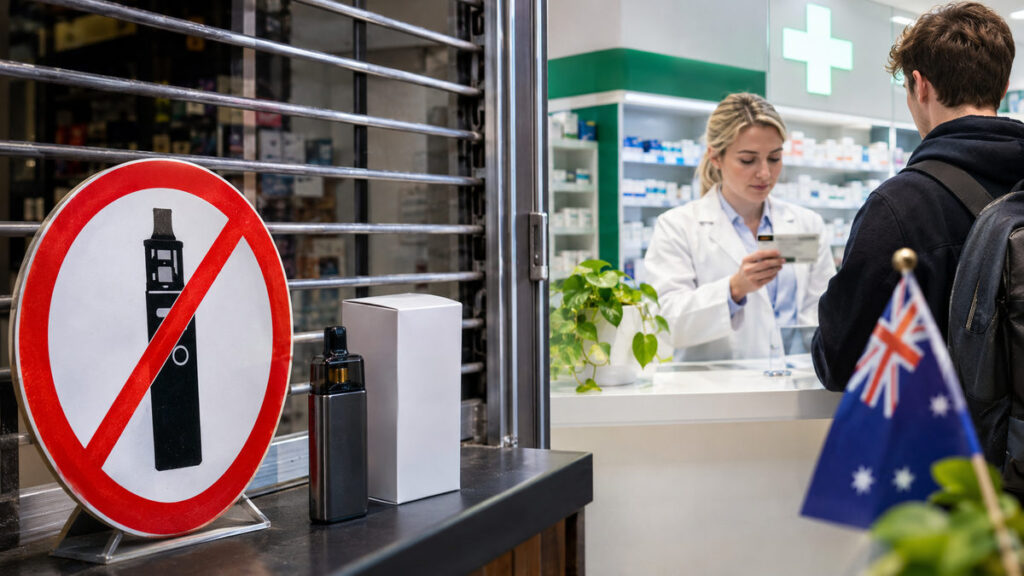
Is a rechargeable vape still disposable if no one can refill it? And can a shop sell stock purchased before restrictions took effect? Disposable Vape Restrictions: Products Affected often turn on details more specific than a charging port or purchase date. Definitions, start dates, exemptions, and enforcement methods differ between jurisdictions. Buyers and businesses need to examine both the product itself and the local rules that apply.
A familiar label does not answer the question. Regulators may look at refillability, replaceable parts, intended reuse, or the substance being inhaled. One rule might prohibit imports, while another focuses on retail supply. This guide covers the main classifications, borderline designs, stock risks, and practical compliance checks.
1. Disposable Vape Restrictions: Products Affected and Policy Goals
Disposable vape restrictions do not always amount to a total ban. A rule may prohibit manufacture, import, sale, supply, distribution, or free samples while leaving personal possession outside its scope. Before deciding what to do with stock, businesses must identify the exact activity controlled by the law.

Start with jurisdiction, since national and local requirements may overlap. A country might regulate imports while a state controls retail sales. A city may then add its own licensing, waste, or public-use requirements. As a result, a product that is lawful in one area could become prohibited just across a nearby border.
Dates, transitions, and current status
The effective date shows when a restriction begins to operate. But different provisions may take effect on different dates under a separate commencement notice. Some authorities give businesses a short period to sell through existing stock. Others stop further supply immediately, even if retailers bought the products lawfully.
Businesses should check the original rule, subsequent amendments, and current official guidance. An old supplier email or news report may miss a recent change. Transition arrangements can also be narrow, sometimes covering only products imported before a particular date. In those cases, invoices or customs documents may be needed to prove the timing.
Why authorities introduce restrictions
These policies commonly aim to reduce youth access and nicotine dependence. Authorities may also be responding to litter, battery fires, wasted resources, and accidental exposure to liquid. Even a small device can contain plastic, circuitry, metal, and a lithium battery. Disposing of millions of these mixed-material products creates serious environmental and safety challenges.
Meeting a disposable-product rule does not mean the product is fully compliant. Other electronic cigarette regulations may govern ingredients, nicotine strength, packaging, warnings, and sales. Retailers might also need licences, age checks, or delivery controls. Every legal product must meet all applicable requirements, not just the disposable-vape restriction.
2. What Is Legally Classified as a Disposable Vape?
The controlling definition comes from legislation, regulations, or formal guidance issued by a regulator. Marketing labels such as “rechargeable,” “eco,” or “multi-use” cannot override it. Authorities often ask whether an ordinary user can refill, reload, or reuse the device. They may also consider what happens once the liquid runs out or the battery is depleted.
Single-use characteristics
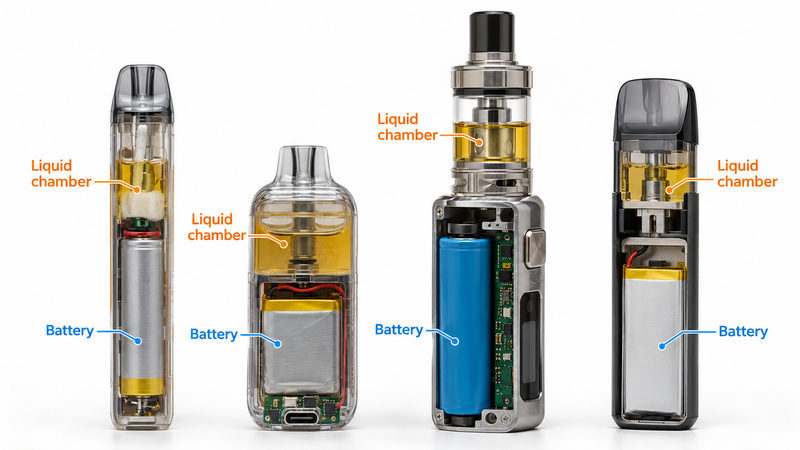
A typical disposable vape comes prefilled and ready to use. Once the liquid is gone or the battery stops working, the user discards the whole unit. Its sealed construction usually prevents normal access to the reservoir, coil, or battery. Together, these features point to a single-use design, whatever name the manufacturer puts on the packaging.
Rechargeability is a frequent source of confusion. A charging port may simply keep the battery running long enough to consume a larger liquid supply. It does not necessarily allow continued use once that liquid is gone. A rechargeable device with a permanently sealed reservoir may therefore still meet the legal definition of disposable.
Refilling and replacing components
What matters is practical refillability, not whether someone could theoretically force the case open. A user should normally be able to refill the tank without cutting, breaking, puncturing, or modifying the product. Another option is replacing an empty pod or cartridge while keeping the battery unit. If neither can be done during normal use, regulators may regard the entire device as disposable.
Any replaceable component should be a genuine consumable part. Replacing the whole body while keeping only a decorative sleeve, for example, may not show meaningful reuse. A durable battery unit built to work with many replacement pods offers much stronger evidence. Clear instructions and replacement parts that are readily available can reinforce that classification.
Evidence behind the classification
Authorities may inspect sealed seams, inaccessible components, expected lifespan, and product instructions. Packaging images, online descriptions, and the way suppliers bundle the product can also matter. Wording such as “use and throw away” is a strong sign of design intent. If the packaging conflicts with technical documents, the compliance risk grows.
Businesses should keep evidence for each model and variation. Helpful records include specifications, manuals, test reports, invoices, photographs, and supplier declarations. Those records should cover battery capacity, reservoir design, compatible components, and expected reuse. A signed declaration is useful, but its claims should still be checked against the physical product.
3. Prohibited, Borderline, and Potentially Legal Vape Products
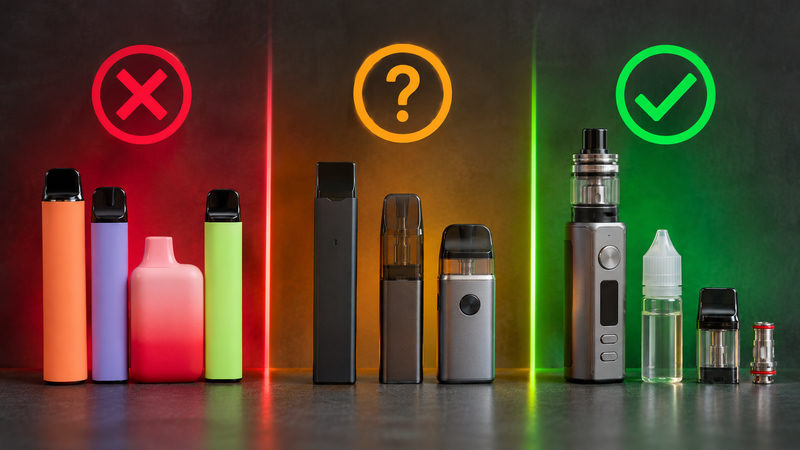
Products commonly prohibited include all-in-one e-cigarettes supplied precharged and prefilled. The user consumes the available liquid, then throws away the complete unit. These products have no practical refill opening or independently replaceable cartridge. Their bright packaging, nicotine strength, or advertised puff count rarely changes the underlying design.
Nicotine-free versions may be covered as well. Many rules classify products according to device design or the substance inhaled, rather than nicotine alone. Swapping nicotine for another formulation does not automatically make a product legal. The precise wording used in the jurisdiction determines whether zero-nicotine liquids, herbal mixtures, or other aerosols are included.
Borderline designs
Rechargeable but non-refillable devices are a major borderline category. Their charging ports allow the battery to be charged repeatedly, but the sealed reservoir still limits the product’s useful life. Many legal definitions focus on whether the device can be reused after the liquid is depleted. Under that approach, charging alone does not turn it into a reusable system.
Refillable but non-rechargeable products present the reverse problem. Users can add liquid, yet a short-lived battery may make meaningful reuse impractical. Some rules specifically require both a rechargeable battery and a refillable reservoir. Meeting only one of those conditions may not satisfy the standard for a reusable product.
Pods and closed systems
Prefilled pods are different from sealed all-in-one products when the pod can be replaced independently. The durable battery unit stays in service across many cartridges. Although each exhausted pod becomes waste, the entire electronic device does not. Even so, local rules may separately regulate or prohibit certain prefilled pods.
Closed pod systems need careful inspection. Does the battery unit genuinely support repeated use with compatible replacement cartridges? Replacement pods should also be commercially available and removable through ordinary use. If users cannot safely remove a supposedly replaceable pod, the claimed classification may not hold up.
Product comparison table
| Product design | Charging capability | Refill or replacement | Intended reuse | Likely treatment |
|---|---|---|---|---|
| Prefilled all-in-one stick | No | None | Discard after depletion | Commonly prohibited |
| Rechargeable sealed all-in-one | Yes | None | Discard after liquid ends | Often treated as disposable |
| Refillable device with fixed short-life battery | No | Liquid can be added | Limited practical reuse | Borderline or noncompliant |
| Reusable battery with replaceable prefilled pods | Yes | Pod replacement | Battery supports many pods | Potentially legal |
| Open tank system | Yes | Tank refill and component replacement | Ongoing reuse | Common reusable alternative |
This table provides general indicators, not a legal determination. A particular jurisdiction may set stricter requirements for pods, batteries, or inhaled substances. Rechargeable open systems and devices with genuinely replaceable pods are often legal alternatives. Still, each one must comply with the relevant product, packaging, sales, and environmental rules.
4. Rules for Consumers, Retailers, Importers, and Online Sellers
Consumers should distinguish between rules on buying or receiving products and rules on possession. A government may stop new sales without criminalizing possession of a device someone already owns. Use of that device could still be restricted in workplaces, transport systems, or public spaces. Instead of relying on a general ban announcement, consumers should check exactly which conduct is prohibited.
The status of earlier purchases depends on commencement dates and any grandfathering provisions. A receipt dated before commencement may help show when ownership changed. It does not, however, automatically allow the product to be resold, gifted, or transferred commercially later. The transition clause must expressly protect both the product and the activity involved.
Travel, delivery, and personal imports
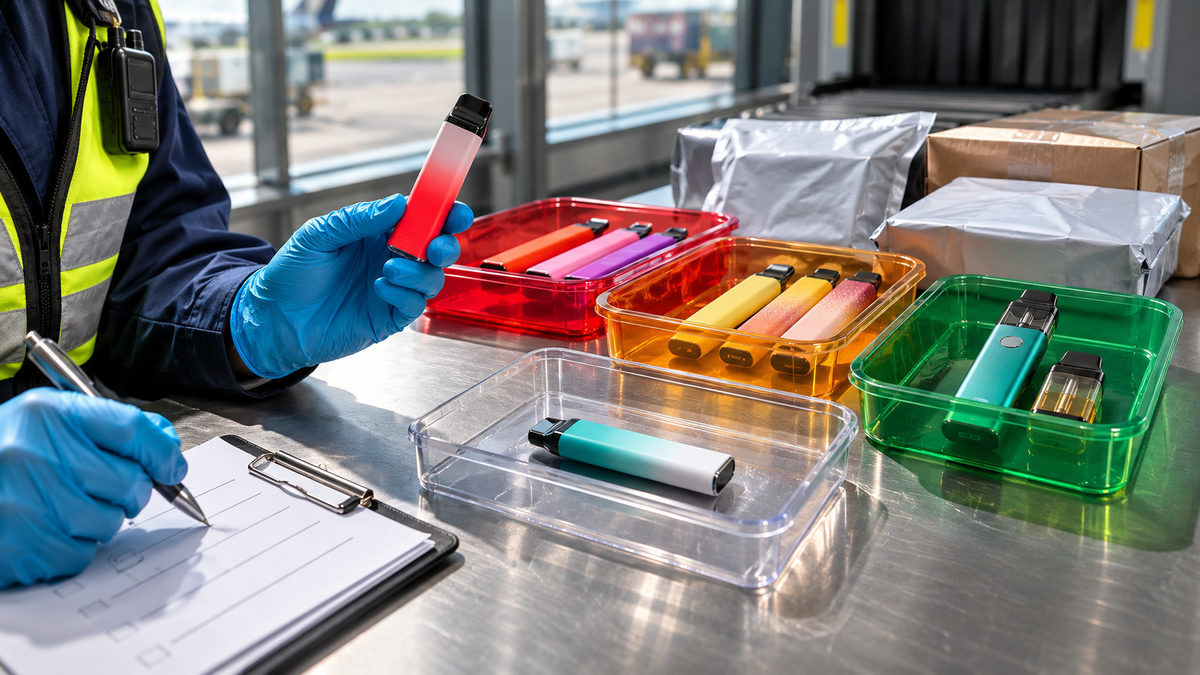
Travelers need to check the rules for luggage, cross-border purchases, and personal imports. Customs authorities may impose quantity limits, declaration requirements, or a complete import ban. Postal shipments can also be inspected, even if a foreign website accepted the order. Prohibited products may be confiscated, with further penalties imposed.
Lithium batteries bring separate airline safety requirements. Carriers may, for instance, require vapes to stay in cabin baggage and forbid charging during the flight. Yet acceptance by an airline does not override a destination’s import ban. Travelers must comply with customs, transport, possession, and public-use rules.
Commercial responsibilities
Retailers and wholesalers need to look beyond completed sales. Restrictions may cover supply, free distribution, display, promotion, and transfers between business locations. Giving away a product with another purchase can still count as supply. Even moving inventory to another branch may qualify as a regulated distribution event.
Online sellers are usually affected by the rules at the customer’s destination. That can apply to websites, marketplaces, social commerce, delivery applications, and other remote orders. Location controls and delivery screening should be tested regularly. A listing does not become lawful simply because the seller is based somewhere else.
Importers and manufacturers often have wider documentation responsibilities. Customs may ask for classification records, ingredient information, invoices, and technical specifications. Manufacturers can also face direct limits on production or downstream distribution. Remaining stock requires the same care, since sell-through rights exist only where an official provision grants them.
5. Existing Stock, Exemptions, Penalties, and Enforcement
Businesses should quarantine questionable inventory before placing more orders. A useful stock audit records model names, quantities, batch numbers, suppliers, and purchase dates. It should also note charging ports, refill openings, removable pods, and sealed components. Clear photographs preserve evidence if the packaging or samples later change.
Handling unsold products
Unsold prohibited stock should never go into ordinary household trash. Businesses should ask regulators about approved return, recall, recycling, or hazardous-waste routes. These products may contain lithium batteries, residual liquid, and electrical components. When mixed with general waste, those materials can cause fires, leaks, and environmental harm.
Several areas of law may govern vape recycling at the same time. Battery, electrical equipment, packaging, and chemical-waste rules can all apply. Businesses should use qualified waste providers and keep transfer records. Disposal certificates should state the quantity, collection date, provider, and treatment route.
Exemptions and consequences
Some jurisdictions provide separate pathways for medically authorized or therapeutic vaping products. Product approval, prescriptions, pharmacy supply, or controlled distribution may be required. Simply printing a medical claim on the package does not create an exemption. Both the product and the supplier must satisfy every formal condition.
Penalties can range from a warning to criminal prosecution. Authorities may serve improvement notices, seize stock, seek forfeiture, or impose fines. A violation might also affect a retail licence or lead to civil liability. Repeated or deliberate misconduct generally creates more risk than a documentation error corrected promptly.
How enforcement works
Enforcement may start at the border or after a retail transaction. Authorities rely on customs screening, inspections, test purchases, and document requests. Online teams also monitor advertisements, social posts, and marketplace listings. A platform may remove a product before any court reaches a final decision.
A supply-chain investigation can link one store to its importers, wholesalers, and manufacturers. That is why invoices and batch records matter during an inquiry. For ambiguous products, businesses should seek written legal advice or confirmation from the regulator. Supplier assurances offer little protection when the physical device tells a different story.
6. How Businesses Can Check Whether a Vape Is Compliant
A consistent review process cuts down on guesswork and uneven decisions. It should cover every stock-keeping unit, including variations in color or capacity. Two products with nearly identical names may have different reservoir designs. New batches also need review whenever the specifications, factory, or packaging changes.
Seven practical verification steps
- Map every jurisdiction. Identify where the product is manufactured, imported, stored, advertised, sold, delivered, or otherwise supplied.
- Collect current official materials. Obtain the law, commencement notice, regulator guidance, customs notice, amendments, and any official classification flowchart.
- Inspect the device. Confirm whether users can recharge the battery and refill or replace the reservoir during normal operation.
- Review supporting records. Check specifications, packaging, labels, instructions, nicotine content, ingredients, invoices, and supplier declarations.
- Check separate retail duties. Review licences, registrations, age verification, recordkeeping, advertising restrictions, and online delivery controls.
- Escalate uncertainty. Request written clarification from the regulator or qualified local counsel when a hybrid design remains ambiguous.
- Preserve the decision. Maintain a product register, training records, supplier warranties, stock actions, and disposal certificates.
Physical inspection should reflect normal consumer use, not destructive access. A technician may be able to open a welded case, but an ordinary user cannot refill it safely. Record any tools and steps needed to reach the components. Photographs or video can support the written assessment, though they do not replace it.
Compact compliance checklist
- Have we identified every relevant jurisdiction and regulated supply activity?
- Are the law, commencement date, amendments, and transition terms current?
- Can users recharge the battery without modifying the device?
- Can users refill the reservoir or replace the cartridge during normal use?
- Will users retain a meaningful battery unit after the consumable part ends?
- Do packaging and instructions accurately describe the product’s design?
- Do nicotine, ingredients, capacity, labeling, and warnings satisfy separate rules?
- Have we verified licences, age checks, delivery controls, and recordkeeping duties?
- Can the supplier support every declaration with technical evidence?
- Have we documented approval, quarantine, return, or disposal decisions?
One “no” does not always mean the product is prohibited. It does, however, flag an issue that must be investigated before further supply. Staff also need to know who has authority to approve products or stop sales. Written procedures keep cashiers, buyers, and warehouse workers from having to make unsupported legal judgments.
7. Related Vape Rules, Legal Alternatives, and Official Updates
Complying with disposable vape restrictions does not satisfy every rule that applies to vaping products. Other controls may cover nicotine strength, flavors, ingredients, tank capacity, emissions, and electrical safety. Authorities may also require child-resistant features or leakage protection. A reusable product can still be unlawful because of an entirely separate defect.
Packaging may need health warnings, ingredient disclosures, tamper evidence, and product identifiers. Unsupported therapeutic, environmental, or reduced-risk claims may also be prohibited. Plain or restricted presentation rules can limit the use of colors and imagery. Businesses should review these requirements before printing labels or publishing product photographs.
Sales rules and reusable choices
Sales controls commonly include minimum-age requirements and identity checks. Advertising, sponsorship, displays, discounts, and online promotions may each face additional limits. Delivery procedures might also require a verified adult recipient and reliable age checks. A simple checkbox is rarely enough to demonstrate meaningful compliance.
Reusable options include open refillable devices and rechargeable systems that accept replacement pods. They still generate waste from coils, cartridges, packaging, and batteries. Users should maintain batteries properly, replace damaged components, and follow safe charging instructions. Businesses can provide clear care and recycling advice without making environmental claims they cannot support.
Finding official updates
Useful sources include legislation databases, health departments, customs authorities, and environmental agencies. Trading-standards bodies and specialist regulators may also issue alerts, decisions, or guides to product definitions. Official email services can help businesses spot amendments and commencement notices. Before relying on any guidance, confirm that it covers the right jurisdiction and is still current.
For businesses active in several markets, a comparison box can make the rules easier to manage. For each jurisdiction, record the scope, effective date, transition period, possession rules, exemptions, and enforcement authority. Add the source date and name the person responsible for updates. This makes important differences visible before inventory moves from one location to another.
Frequently asked questions
Are nicotine-free disposable devices affected? Often, yes. Classification may depend on the device design or inhaled substance rather than nicotine. The local definition, however, provides the final answer.
Does recharging make a sealed vape reusable? Not always. If users cannot replace or replenish the liquid supply, authorities may still consider the device disposable. Businesses need to assess its complete lifecycle.
Are closed pod systems prohibited? Some may remain lawful if users keep a durable battery and replace the pods independently. Separate rules for pods, ingredients, and nicotine can still apply. Check every model in each jurisdiction.
Can retailers sell older stock? Only if the applicable law or transition provision allows the sale. An earlier invoice does not, by itself, guarantee sell-through rights. Businesses should keep evidence supporting any transition claim.
Are online orders and possession treated alike? Usually not. An order can engage sale, supply, import, and delivery rules even when possession remains lawful. Local public-use restrictions may still limit where the product can be used.
Do medical products receive an automatic exemption? No. A separate pathway may be available, but the product must meet its approval and distribution conditions. Retailers should verify the relevant authorizations instead of trusting promotional claims.
Conclusion
Whether restrictions apply depends on the product’s physical design, intended reuse, nicotine status, supply activity, timing, and the local legal definition. Rechargeability alone may not be enough. A compliant reusable system will generally allow practical refilling or use independently replaceable consumable parts. Even then, other product and sales rules continue to apply.
Businesses should quarantine uncertain stock and keep a record of every classification decision. Supplier claims, transition rights, recycling routes, and related retail duties all need verification. Check the latest legislation and regulator guidance in every market where vapes are bought, sold, imported, or distributed. Before accepting more orders, review each product model against a documented compliance checklist.