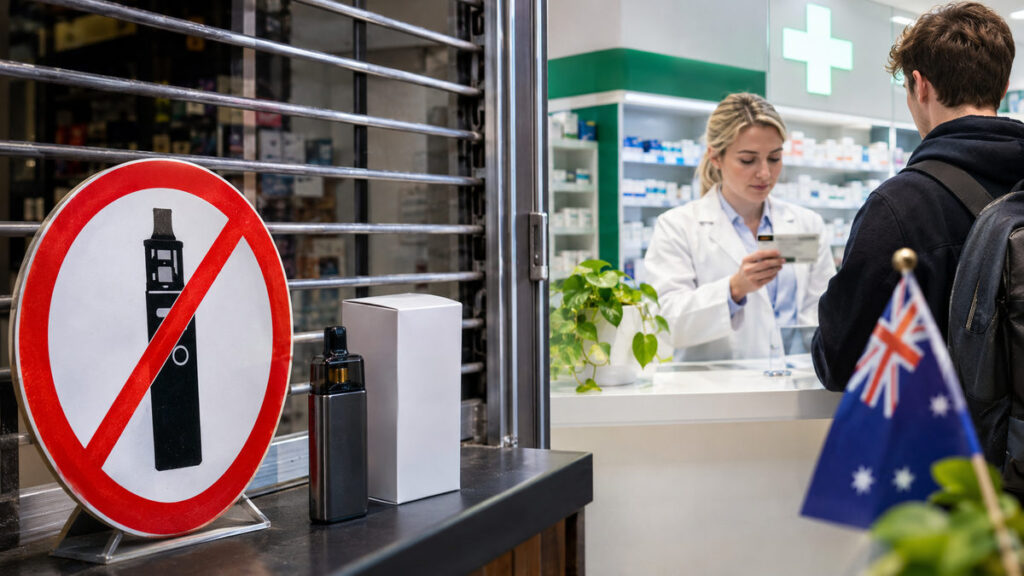
A therapeutic vape may look like a consumer device, but it follows a very different regulatory path. Understanding How Therapeutic Vape Product Standards Work shows the medicines-level controls applied to every ingredient, claim, cartridge, and production record. Still, legal access does not necessarily mean a product has formal approval. Patients and professionals need to consider both the supply pathway and the evidence behind it.
Regulators may assess formulation quality, manufacturing controls, dose delivery, emissions, device safety, and clinical evidence. Importers and suppliers often must show where each batch originated and how it was stored along the way. These safeguards help protect patients from inconsistent strength, harmful contaminants, misleading claims, and faulty hardware. The sections below explain this regulatory lifecycle in plain English.
1. How Therapeutic Vape Product Standards Work
Classification determines the applicable rules
A product’s intended use usually determines its legal classification. A device promoted for smoking cessation may be regulated differently from one sold for recreational use. Regulators look at its claims, presentation, ingredients, strength, design, and instructions. Depending on the framework, they may classify connected parts separately or treat the complete system as one therapeutic product.
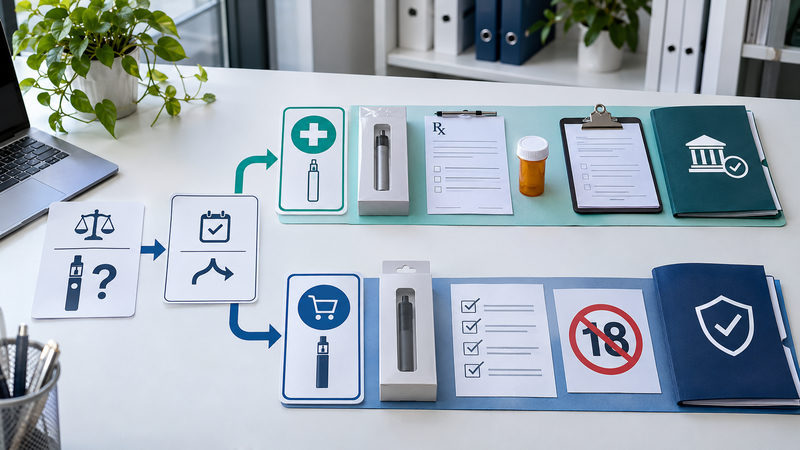
Composition matters too. Nicotine and other active ingredients can bring medicines or controlled-substance rules into play. Cartridges, batteries, and heating systems may also be covered by medical-device or electrical-safety frameworks. Simply calling something an accessory does not shield it from scrutiny. Regulators generally focus on how suppliers present the product and how people are expected to use it.
Responsibilities across the supply chain
Rules vary considerably between countries and can change as new evidence emerges. A product that is lawful in one country may therefore be restricted in another. Access pathways, nicotine controls, technical specifications, and prescription requirements also differ. Manufacturers and suppliers should check local requirements before making commercial decisions.
Responsibility for therapeutic vape compliance is shared among several parties:
- Medicines regulators assess products, authorize pathways, inspect facilities, and manage safety actions.
- Standards bodies develop technical methods for testing, packaging, electrical safety, and product performance.
- Customs authorities examine import declarations, permits, product identity, and shipment documentation.
- Testing laboratories measure strength, impurities, emissions, dose delivery, and other quality characteristics.
- Manufacturers and importers control quality, documentation, traceability, complaints, and regulatory reporting.
- Prescribers, pharmacies, retailers, and suppliers confirm lawful access and provide suitable patient information.
Approval and access are not identical
A formally approved medicine has completed a defined regulatory assessment for its authorized use. Some systems, however, allow unapproved therapeutic goods to be supplied through prescription exemptions or special-access programs. Named-patient pathways may permit supply to one identified person. Compounded preparations can follow a separate framework, with responsibility resting on the authorized compounder and prescriber.
These categories are not interchangeable. An unapproved product may have much less regulator-reviewed evidence behind it than an approved medicine. A legal exemption only confirms that a supply pathway exists; it does not mean the regulator endorses every feature of the product. Above all, compliance does not make vaping risk-free or suitable for every patient.
2. The Therapeutic Vaping Product Approval Process
Building the evidence package
Approval usually begins with a detailed account of the product and its intended purpose. Applicants identify the active ingredient, excipients, device components, strength, dosage form, and proposed presentation. They must also explain how production controls keep quality consistent. Regulators need enough detail to link the tested product to the version intended for patients.

A typical evidence package may contain:
- Product identity, complete formulation, specifications, and component descriptions.
- Manufacturing processes, facility information, quality controls, and validation evidence.
- Analytical methods, batch results, impurity profiles, and stability studies.
- Nonclinical evidence covering toxicology, inhalation risks, and foreseeable exposure.
- Clinical evidence supporting safety, effectiveness, dosing, and the proposed indication.
- A risk-management plan addressing known risks, uncertainties, misuse, and ongoing monitoring.
Regulators ask whether the proposed tests can distinguish an acceptable batch from a defective one. Stability data must support the requested shelf life and storage conditions. Clinical batches should also represent the intended commercial product. If significant changes are made, bridging evidence or further studies may be needed.
Claims and benefit-risk assessment
Every therapeutic claim needs reliable supporting evidence. A smoking-cessation claim, for example, requires more than showing that a device produces nicotine aerosol. Reviewers consider the target population, treatment duration, dosing instructions, comparators, outcomes, and adverse effects. They also ask a practical question: can patients use the product correctly?
The review also covers foreseeable misuse. Regulators may consider excessive use, device modification, accidental exposure, sharing, and use by unintended populations. They weigh the expected benefits against those risks and any remaining uncertainties. A balance considered acceptable for dependent adult smokers may be unacceptable for adolescents or non-smokers.
From development to ongoing monitoring
The lifecycle starts with formulation, device selection, laboratory development, and clinical planning. The sponsor then submits evidence through the relevant regulatory route. Once authorization is granted, qualified facilities manufacture and test commercial batches. An authorized person reviews the records before releasing acceptable stock.
Before distribution, importers must complete the necessary permits, customs declarations, and supply-chain checks. Pharmacies or other authorized suppliers then confirm that each transaction uses the proper legal pathway. Patients receive directions and warnings with the product. Once use begins, complaints and adverse events become part of ongoing safety monitoring.
Lawful access through an exemption does not turn an unapproved product into an approved medicine. Requirements can also shift between development and market entry. Manufacturers and suppliers should therefore consult the relevant therapeutic goods regulator before each submission. The same check should be repeated before major changes to the formulation, device, manufacturing process, or labeling.
3. GMP, Manufacturing Controls, and Batch Release
Pharmaceutical quality systems
Good Manufacturing Practice, or GMP, turns a product design into consistent commercial batches. An effective system clearly sets out quality responsibilities, decision rights, training requirements, and escalation routes. Managers must provide suitable facilities, qualified equipment, and enough competent personnel. Written procedures should describe what actually happens, not an idealized version created for the paperwork.

Facilities require controlled sanitation, environmental conditions, pest control, and measures that prevent contamination. Personnel must follow hygiene and gowning rules suited to the work being performed. When deviations occur, quality teams investigate them rather than quietly accepting unexplained results. Changes and corrective and preventive actions must also pass through documented risk assessments.
Suppliers, materials, and validated production
Manufacturers need a clear view of their entire supplier network. That includes suppliers of active ingredients, flavors, solvents, bottles, cartridges, seals, batteries, and heating elements. Qualification may involve questionnaires, agreements, audits, sample testing, and ongoing performance monitoring. The greater the material risk, the stronger the controls usually need to be.
Incoming checks establish whether deliveries meet approved specifications. Staff might verify identity, strength, dimensions, cleanliness, certificates, and packaging condition. Materials should remain in quarantine until authorized personnel accept them. Sampling plans must also produce representative test portions without introducing contamination.
Validated production shows that a process can operate consistently within established limits. Controls may cover mixing time, temperature, filtration, filling accuracy, closure placement, and cartridge assembly. Equipment qualification, meanwhile, confirms that machines work as intended. Cleaning procedures must keep residues and microorganisms from carrying over into later batches.
In-process checks can catch trouble before finished-product testing begins. Operators may monitor formulation uniformity, fill weight, leakage, resistance, airflow, or device activation. Computerized systems need access controls, backups, audit trails, and validated calculations as well. This allows investigators to reconstruct who performed each action and when.
Documentation, testing, and release
Master formulas specify the approved materials, quantities, equipment, instructions, and expected yields. Batch records capture what actually occurred during production. Distribution records then connect released batches to their customers and destinations. Complaint files, audit trails, retention samples, and chain-of-custody records all support future investigations.
Finished-product testing must use representative samples and appropriate analytical methods. Laboratories compare the findings with approved specifications and record them in a certificate of analysis. But a certificate by itself does not prove that the sampling or testing was dependable. Independent verification can offer added assurance for higher-risk products, unfamiliar suppliers, or imported batches.
An authorized quality professional reviews the manufacturing records, deviations, test results, and any unresolved investigations. Only after that review should the batch be released. Passing a handful of laboratory tests cannot make up for serious manufacturing failures. Release decisions depend on the full quality history, not a few isolated numbers.
Import controls
Importers may have to show that overseas facilities meet recognized GMP expectations. They may also need product specifications, batch certificates, shipping records, customs documents, and temperature data. Supply-chain authentication can help uncover substituted or counterfeit stock. Contracts should leave no doubt about who handles complaints, recalls, testing, and reporting.
Customs clearance alone does not confirm therapeutic compliance. Before shipment, importers should verify permits, product identity, labeling, quantities, and lawful recipients. After arrival, they should check for transport damage and storage excursions. Clear records must connect each imported consignment to every batch later distributed.
4. Ingredient, Aerosol, and Dose-Delivery Testing
Identity, strength, and uniformity
Laboratories begin by confirming that the declared active ingredient is actually present. They then measure nicotine or another active substance against the approved concentration range. Technicians also check fill quantity and formulation uniformity. Together, these tests help prevent underdosing, excessive exposure, and inaccurate labels.
Consistency is needed both within each cartridge and across the full batch. Liquid sampled near the beginning of a filling run, for example, should resemble liquid filled near the end. Laboratories may compare cartridges taken from several production locations as well. The results can expose problems with mixing, settling, filling, or sampling.
Delivered dose and product performance
Liquid concentration alone does not always predict the dose a patient will inhale. Aerosol production is affected by device power, airflow, coil condition, puff behavior, and the properties of the liquid. Testing may therefore measure the delivered dose per puff or across a defined period of use. Methods should reflect the intended instructions while still accounting for foreseeable variation.
Comparing devices helps identify inconsistent performance. Testing at different stages of cartridge life can also show whether delivery changes as the liquid runs down. Researchers may look at early, middle, and late use points, then test again after storage, transport vibration, or repeated activation.
One practical study could compare ten devices under a programmed puff schedule. Investigators might measure aerosol output after each defined block of puffs. Yet no single schedule can represent every patient. A strong testing program includes both realistic use and challenging conditions.
Impurities and formulation hazards
Impurity testing looks for substances introduced during synthesis, manufacturing, storage, or use. Relevant groups may include:
- Nicotine-related impurities and chemical degradation products.
- Residual solvents from ingredients or manufacturing processes.
- Heavy metals released from materials or heating components.
- Microorganisms, microbial toxins, and objectionable contamination.
- Particulates, fibers, lubricants, cleaning residues, or unintended chemicals.
- Formulation-specific hazards created through ingredient reactions.
Specifications should account for both toxicological risk and what can feasibly be controlled through analysis. Unexpected peaks require an explanation; unidentified substances cannot simply be ignored. Results close to a safety threshold may call for tighter manufacturing limits. Trends in stability samples can also reveal degradation before the product formally fails.
Ingredient safety and aerosol emissions
An ingredient that is safe to swallow is not necessarily safe to inhale. Heating may also turn familiar ingredients into entirely different chemicals. Evaluators examine excipient purity, inhalation exposure, thermal behavior, and interactions with device materials. They also screen for substances prohibited under the applicable national rules.
Toxicologists assess exposure at both the proposed dose and the maximum foreseeable level of use. They consider vulnerable patients, treatment duration, cumulative exposure, and the combined effect of impurities. Flavoring agents need particular scrutiny because a pleasant taste says nothing about inhalation safety. Each ingredient should have a clear, justified purpose.
Emissions testing examines what the user may actually breathe in. Programs can vary power, temperature, airflow, puff duration, puff volume, frequency, and device configuration. Worst-case settings may reveal overheating or dry-coil conditions, while realistic settings help estimate exposure during normal use.
Reliable methods and investigations
Analytical methods must identify and measure target substances accurately. Validation commonly covers accuracy, precision, selectivity, range, robustness, and detection limits. Laboratories also need suitable reference standards, calibrated equipment, trained analysts, and controlled data systems. Technical skill matters, but dependable recordkeeping does too.
Reproducibility matters when several laboratories test the same batch. Methods should clearly define sample preparation, device conditioning, puffing parameters, and calculations. If a result falls outside specification, it requires a documented investigation. Simply repeating the test without scientific justification may conceal a real manufacturing problem.
5. Device Safety, Materials, Stability, and Packaging
Device and cartridge performance
A therapeutic vape pairs a formulation with hardware that controls its delivery. A device failure can therefore affect dosing as well as physical safety. Testing may cover batteries, charging behavior, electrical faults, short circuits, overheating, and heating-element performance. Investigators should also consider damage from drops, vibration, or the use of incorrect chargers.
Cartridge studies look at leakage, breakage, airflow, connection strength, activation controls, and liquid depletion. Designers need to test foreseeable misuse, not just flawless operation. Repeated insertion, blocked airflow, overuse, and accidental activation can uncover hidden weaknesses. Clear fault responses may reduce harm when a component fails.
Materials, extractables, and leachables
E-liquid comes into contact with reservoirs, seals, plastics, metals, coatings, wicks, and heating components. Those materials must stay chemically and physically compatible throughout the product’s shelf life. Temperature changes or prolonged contact may cause swelling, cracking, corrosion, or adsorption. Any of these changes could affect potency, leakage risk, or aerosol composition.
Extractables studies use controlled conditions to identify substances that materials could release. Leachables studies focus on what actually migrates into the product under relevant conditions. Risk-based programs consider manufacture, storage, transport, and use. The findings inform material selection, specifications, toxicological assessments, and routine controls.
Stability and shelf-life evidence
Stability studies provide the evidence behind storage instructions and expiration dates. Long-term studies follow the product under its recommended conditions. Accelerated studies expose it to more challenging conditions, helping researchers identify likely degradation pathways. Both should test product quality in the intended commercial packaging.
Researchers track potency, impurities, appearance, pH, leakage, device function, and packaging integrity. In-use studies assess performance after opening or repeated activation. Transport studies may cover heat, cold, vibration, pressure, and brief temperature excursions. The evidence should reflect the realities of distribution and patient use.
An expiration date cannot be based on the liquid alone. A formulation may remain stable, for instance, while a seal hardens and starts to leak. Battery performance may also deteriorate in storage. Shelf-life decisions must therefore cover the whole product system.
Protective packaging and labeling
Depending on national rules, packaging may need to be child-resistant, tamper-evident, leak-resistant, or otherwise protective. The exact requirements depend on product classification, ingredient strength, container type, and local law. Packaging must also protect the product during ordinary handling and transport. At the same time, intended patients still need to be able to open and use it correctly.
Therapeutic vape labeling commonly includes several essential details:
- Product name, active ingredient, strength, and relevant ingredients.
- Directions for use, dosing information, warnings, and contraindications.
- Storage conditions, batch number, and expiration date.
- Manufacturer, sponsor, importer, or authorized supplier details.
- Required authorization numbers, caution statements, and disposal instructions.
Patient information should describe correct operation in straightforward language. Users need clear guidance on dosing, charging, maintenance, cleaning, storage, and disposal. Known risks and common adverse effects should be easy to locate. The instructions must also say when use should stop and medical advice should be sought.
6. Compliance Checks, Surveillance, Recalls, and Buyer Checklist
Verification before and after supply
Regulators and customs authorities may check shipments against permits, declarations, and authorization records. Importers also review GMP evidence, batch certificates, labels, shipping conditions, and product provenance. Purchasers may verify the same details before accepting stock. These checks help uncover diversion, counterfeiting, substitution, and products that were mishandled in transit.
Oversight does not end at distribution. Manufacturers and suppliers continue collecting complaints, adverse events, defects, and concerns about use. Trend analysis may reveal a growing issue before any individual case appears serious. Periodic reviews bring the quality, clinical, and distribution evidence together.
A safety signal can lead to targeted testing, label changes, or a wider product investigation. Regulators may also inspect facilities and review their records. Inspectors can examine deviations, complaints, computerized data, supplier controls, and recall readiness. If documentation is weak, a company may be unable to prove its controls ever worked.
Failures, enforcement, and recalls
The response to noncompliance depends on its severity and reach. Authorities or companies may:
- Quarantine affected stock or suspend further supply.
- Reject an import shipment or require its removal.
- Recall specific batches, product types, or all distributed units.
- Issue warnings, safety communications, or corrective directions.
- Change, restrict, suspend, or cancel an authorization.
- Apply financial, civil, or criminal penalties where legislation permits.
Effective recalls depend on accurate batch and distribution records. A company must be able to identify affected customers quickly, notify them, and reconcile returned stock. Effectiveness checks then confirm that recipients received the notice and acted on it. Root-cause analysis guides the corrective and preventive action that follows.
Consider leaking cartridges traced to one seal supplier and two production batches. With precise records, the company can limit the recall to the affected units. Incomplete traceability, by contrast, may force a much broader response. Good records protect patients and avoid needless disruption.
Healthcare professional and purchaser checklist
Before prescribing, purchasing, importing, or supplying a therapeutic vape, check:
- The legal supply pathway and any required prescriber involvement.
- The current regulator listing, authorization, exemption, or permit details.
- The manufacturer, importer, sponsor, pharmacy, or authorized supplier identity.
- The active ingredient, stated strength, batch number, and expiration date.
- Intact packaging, readable warnings, complete directions, and patient information.
- Appropriate shipping, storage, temperature, and chain-of-custody records.
- Supporting batch certificates and quality documents appropriate to the pathway.
Some warning signs demand immediate attention. Missing batch numbers, vague strength information, and unsupported medical claims may point to poor control. Altered packaging or suppliers that cannot be verified also undermine confidence in the product’s identity. An unusually low price could indicate counterfeit, diverted, expired, or mishandled stock.
Products obtained outside lawful channels may have bypassed key safeguards. Professional-looking packaging is not enough. A copied authorization number or certificate might not correspond to the actual batch. Direct confirmation with the relevant authority or authorized supplier offers much stronger assurance.
Regulatory frameworks keep evolving as evidence and technology change. Healthcare professionals and purchasers should regularly check current standards, safety alerts, recalls, and access rules. Those checks should be repeated whenever products or suppliers change. A route that was lawful yesterday may not meet today’s requirements.
Conclusion
Therapeutic vaping products may be subject to medicines-level controls throughout their lifecycle. These cover evidence, GMP manufacturing, ingredient purity, dose delivery, emissions, device safety, packaging, labeling, and traceability. Surveillance systems also track complaints, defects, adverse events, and emerging safety signals. When products fall short of the required standards, recalls and enforcement measures can follow.
The precise obligations depend on the jurisdiction, product classification, and legal access pathway. Approval, lawful access, and clinical suitability are separate issues. Compliance also cannot eliminate every health risk. Patients still need sound professional advice and clear instructions.
Before prescribing, purchasing, importing, or supplying a product, confirm its current regulatory status. Check the supporting documentation with the relevant therapeutic goods regulator as well. Focus on the exact product, strength, manufacturer, supplier, and batch—not broad claims. Careful verification is the strongest basis for lawful and responsible supply.